
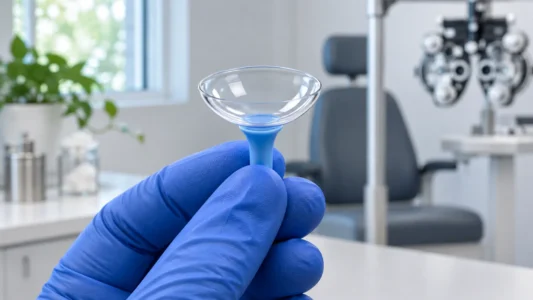
Standard soft contact lenses correct many common prescriptions. Scleral lenses are larger, custom-fitted rigid gas-permeable lenses that rest on the sclera and vault over the cornea, maintaining a fluid reservoir beneath the lens.
When might scleral lenses be recommended?
Scleral lenses can improve vision for selected patients with keratoconus, other irregular corneas, or postsurgical corneal changes. They may also protect the ocular surface in certain severe dry-eye or exposure-related conditions. They are not the best first choice for everyone with irritation. Sources: Qiu et al. on scleral lenses for dry eye.
| Feature | Standard soft contacts | Scleral contacts |
|---|---|---|
| Fit | Conform to cornea | Vault over cornea; land on sclera |
| Typical use | Common refractive errors | Irregular corneas; selected surface disease |
| Care | Daily disposable or reusable | Reusable; special disinfection and sterile filling |
| Follow-up | Regular lens checks | Specialty fitting and follow-up |
What does fitting involve?
Your clinician evaluates corneal shape, ocular surface health, lens vault and landing, vision, and comfort. A successful fit may require trials, adjustments and monitoring after lens settling.

Safety and daily care
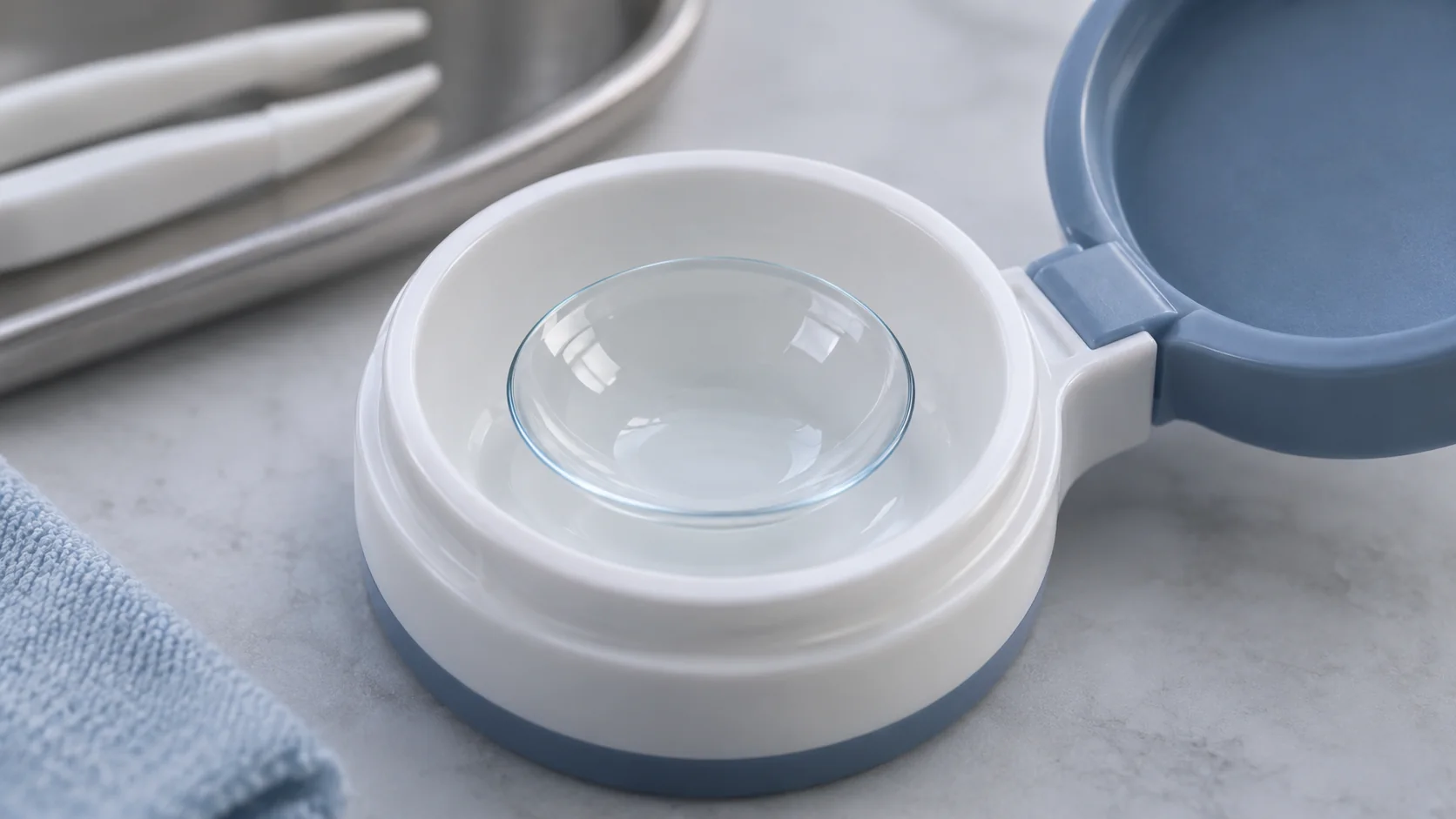
Use only the prescribed sterile preservative-free filling solution; saline does not disinfect. Never use tap water or homemade saline. Follow cleaning and disinfection instructions, avoid swimming or showering in lenses, and do not sleep in them unless specifically prescribed. Remove lenses and seek urgent evaluation for pain, redness, photophobia or reduced vision. Sources: CDC contact lens safety.